
Our Manufacturing Process
From raw material preparation to finished-product dispatch, Sevana Polymers follows a structured manufacturing process for molded rubber products and custom polymer components.
From Raw Material to Finished Product
Manufacturing a consistent rubber component involves more than molding the final shape. At Sevana Polymers, the rubber manufacturing process begins with raw material receipt and analysis and continues through rubber mixing, compound preparation, molding, inspection, testing and final dispatch.
The exact process and checks may vary depending on the product, material and application requirements. As an experienced rubber products manufacturer in Thrissur, we maintain practical control across each stage.
Our Process Flow
A clear seven-stage process covering inbound rubber receipt to final dispatch.
Raw Material Receipt & Analysis
Materials received for production are checked and evaluated as required.
Mixing & Compounding
Rubber compounds are prepared using available mixing and calendaring equipment.
Compound Analysis
Compounds can be evaluated for relevant properties before proceeding to molding.
Molding Process
Rubber compounds are processed into required component forms using presses.
Semi-Finished Goods Inspection
Components are inspected during manufacturing to identify visible or dimensional issues.
Finished Goods Testing
Finished products are tested using appropriate available testing facilities.
Packing & Dispatch
Products are packed with identification and traceability information to support clear handling and delivery.
01 — Raw Material Receipt & Analysis
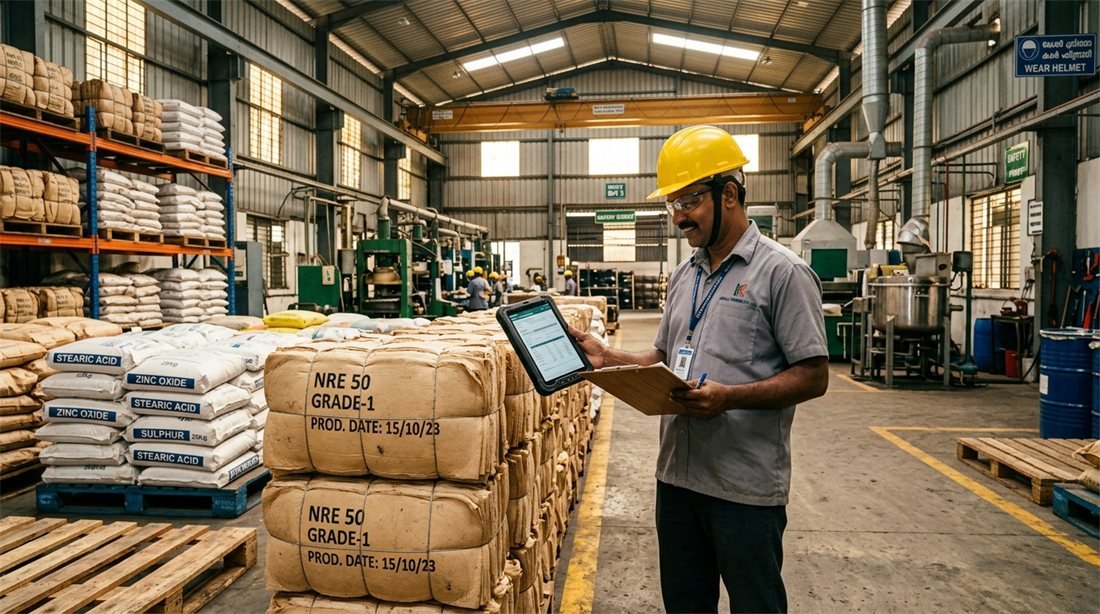
The manufacturing process begins with the receipt of the required rubber materials and compounding ingredients.
Materials are checked and evaluated as appropriate before they enter the production stream.
The objective is to ensure that all polymers, fillers, curatives, and process oils are verified against specifications before compounding.
02 — Mixing & Compounding
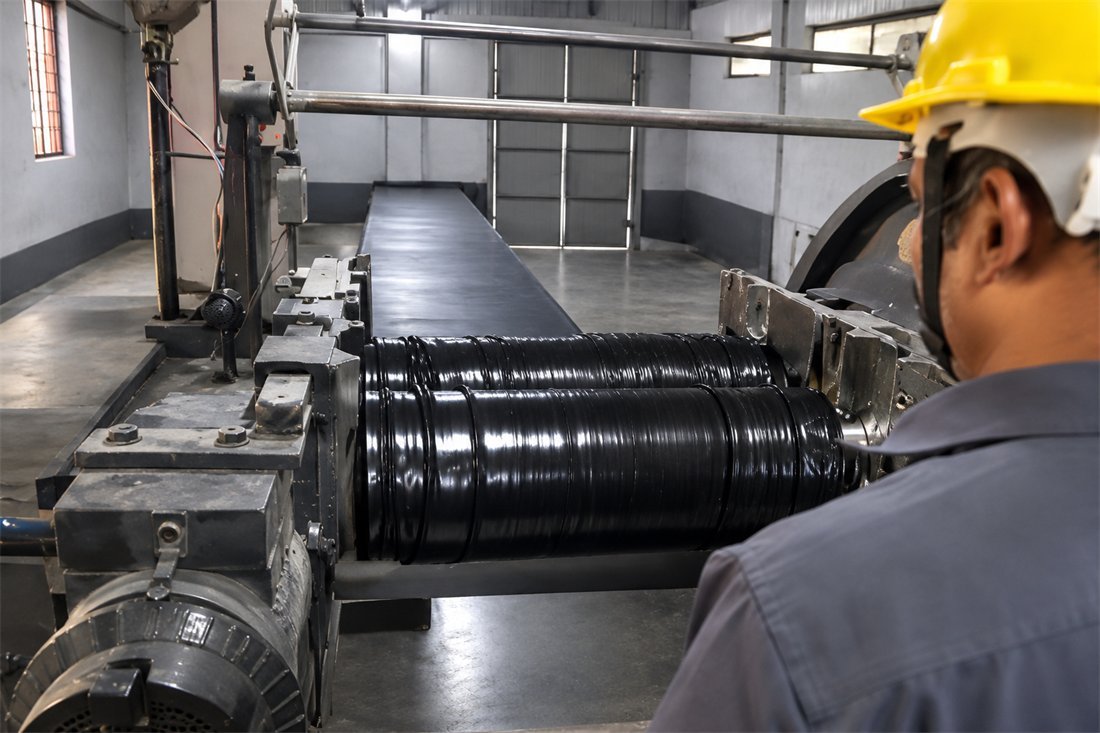
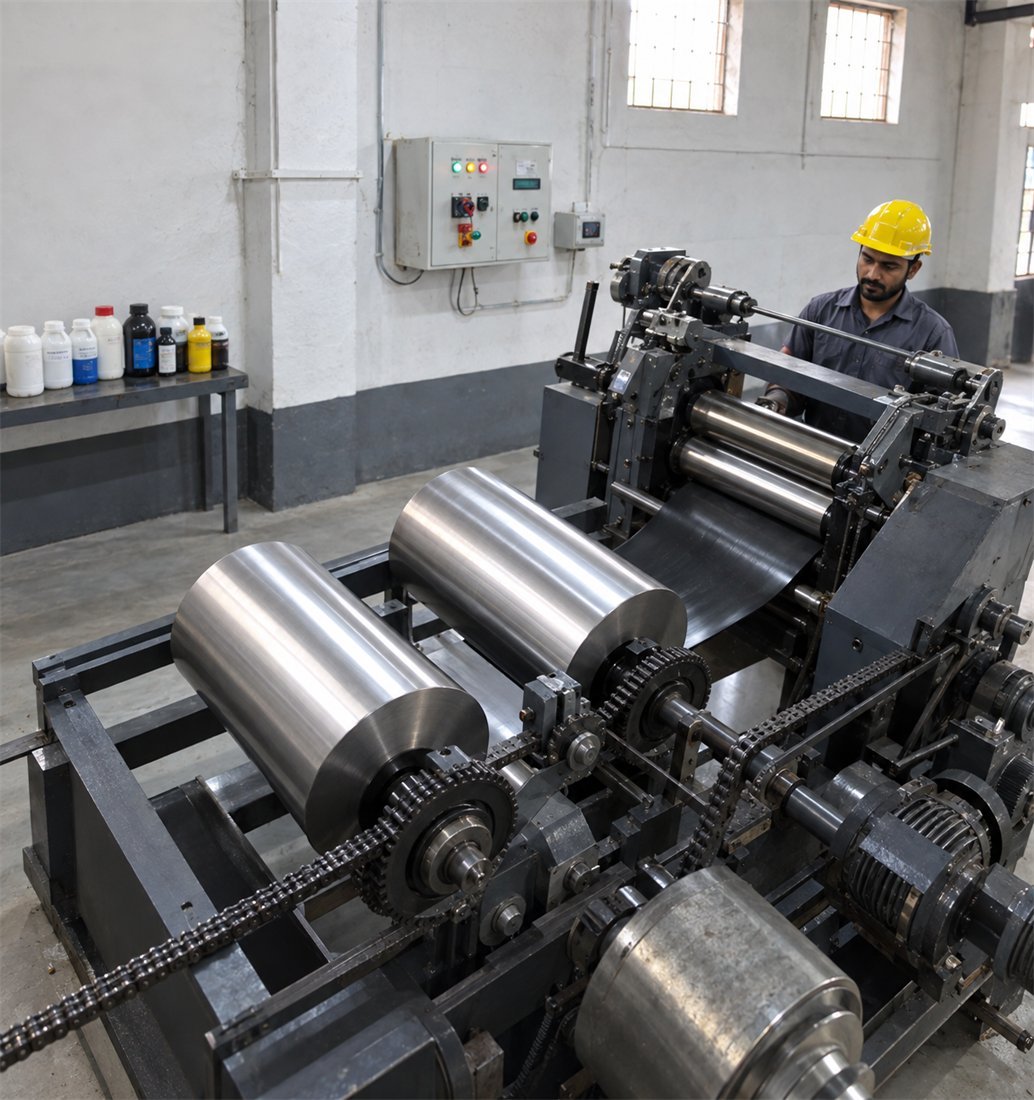
Rubber materials and required ingredients are processed to prepare the compound needed for the product. Skilled rubber compounding ensures uniform ingredient dispersion.
Sevana Polymers uses mixing and calendaring equipment as part of its rubber processing capabilities.
The compounding stage is important for achieving the required characteristics of the rubber compound before molding.
03 — Compound Analysis
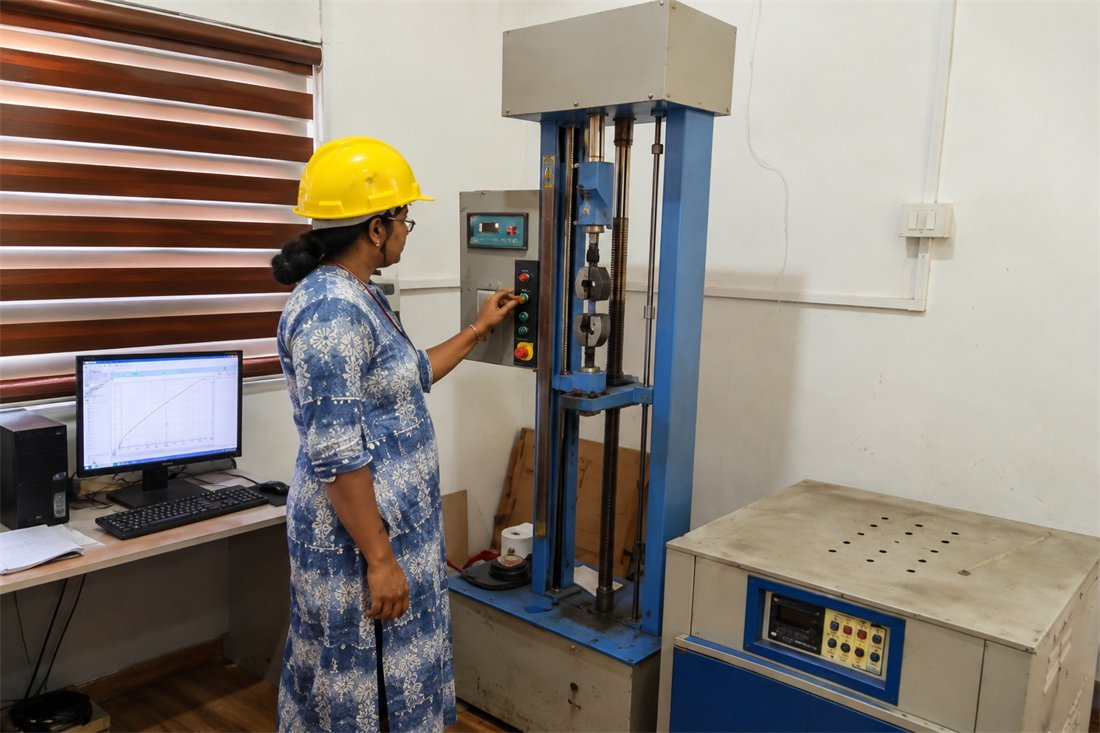
Prepared rubber compounds are evaluated for relevant properties before they proceed to molding, as applicable to the product requirement.
04 — Molding Process
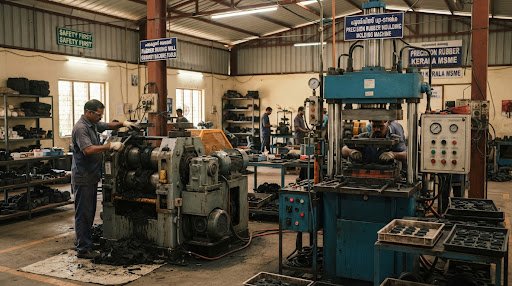
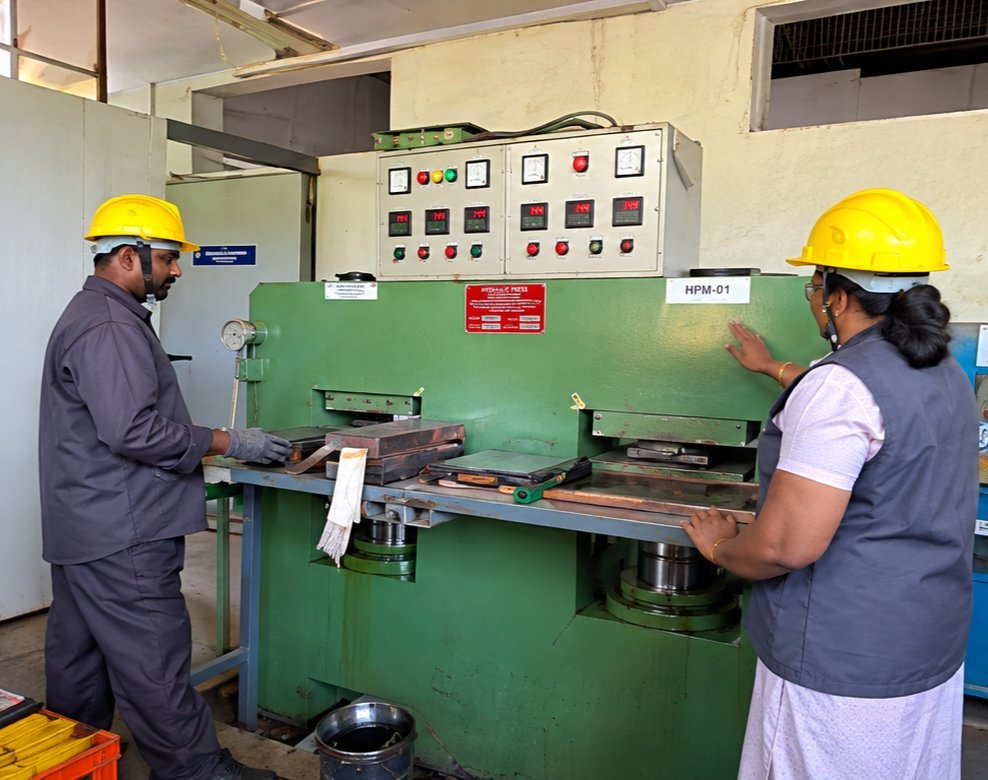
After compound preparation and evaluation, the rubber compound is processed into the required component shape using appropriate molding methods. Our rubber molding process shapes raw elastomer into durable products.
The available manufacturing setup includes:
Molding requirements vary according to the component design, material and application.
05 — Semi-Finished Goods Inspection
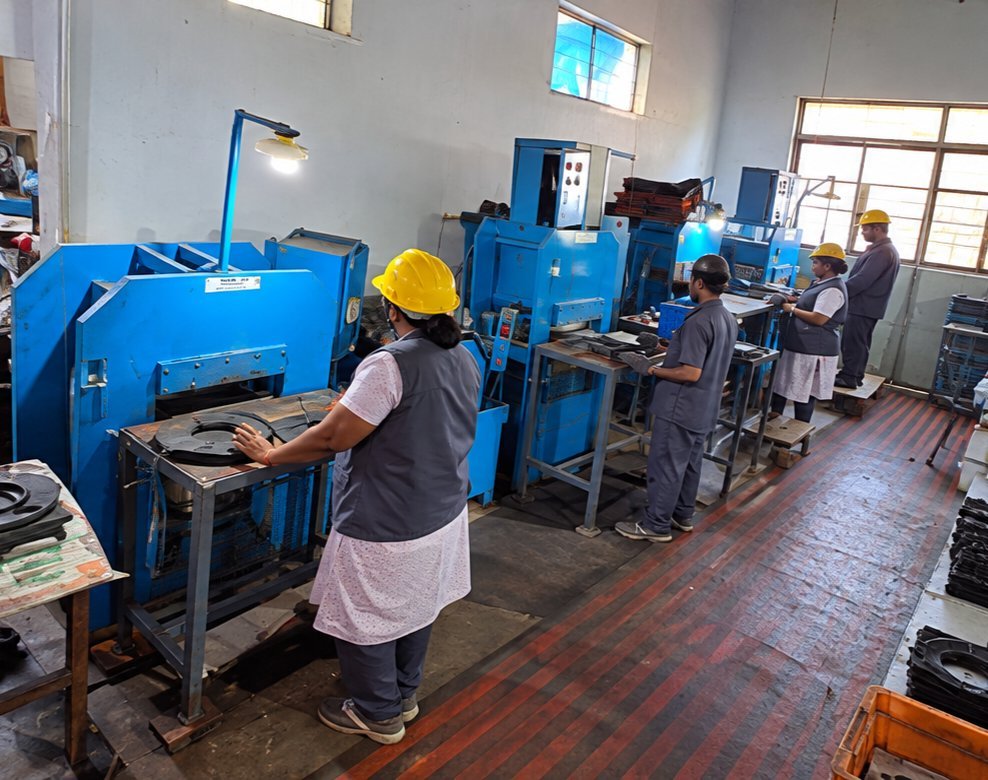
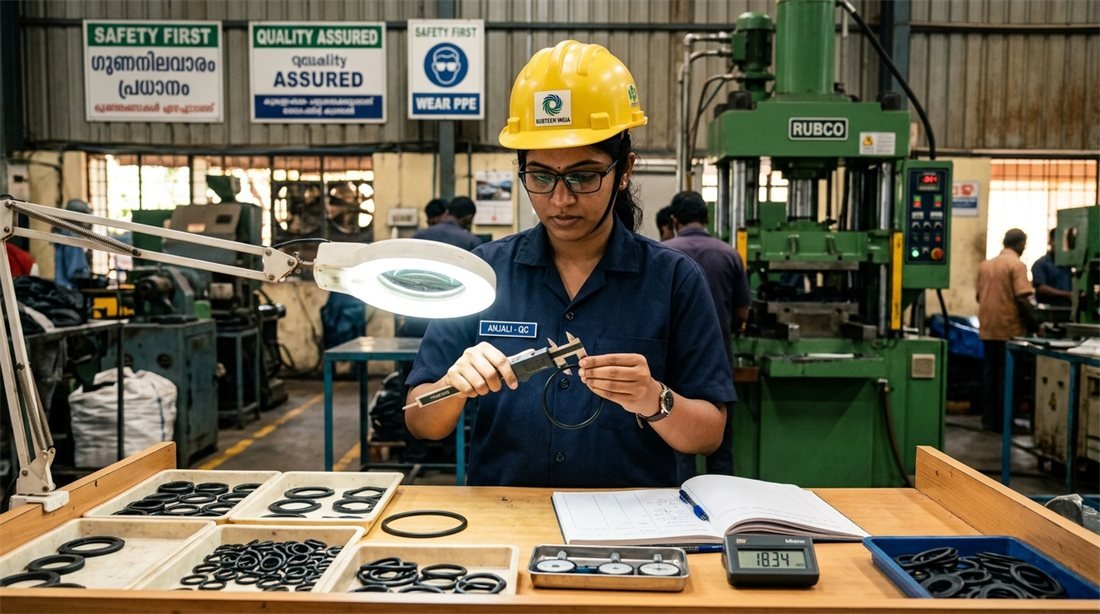
After molding, components are inspected to identify visible or dimensional issues and to verify that the semi-finished product is suitable for the next stage.
Inspection activities depend on the product and its requirements.
06 — Finished Goods Testing
Finished rubber products can be evaluated using available testing facilities according to the applicable product requirements. Disciplined rubber product testing ensures operational confidence.
- Hardness
- Tensile Strength
- Elongation at Break
- Compression Set
- Other applicable product characteristics

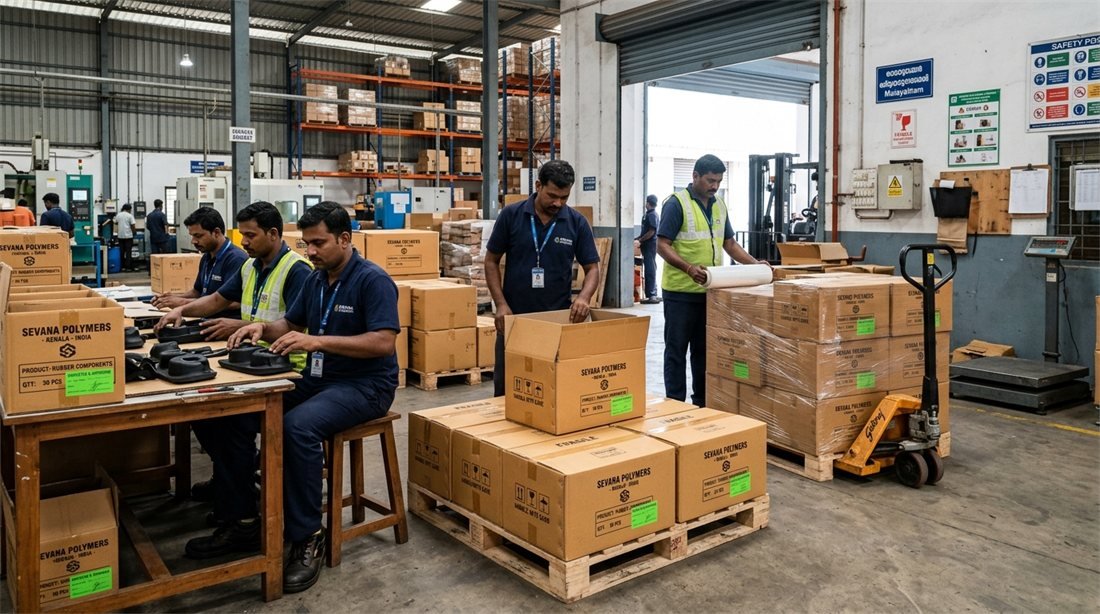
07 — Packing & Dispatch
After the required inspection and testing activities are completed, finished products are prepared for packing and dispatch.
Products are packed with appropriate identification and traceability information to support clear handling and delivery. As an experienced rubber components manufacturer in Thrissur, we ensure products reach customers properly labeled.
Quality Checks Throughout the Process
Quality is not limited to the final stage of manufacturing. Material evaluation, compound preparation, molding, inspection and testing form connected stages of the manufacturing process.
This approach helps maintain control over the production process and provides opportunities to identify issues before finished products are dispatched.
Manufacturing Equipment
The current manufacturing setup includes equipment supporting rubber preparation, molding and product testing.
Rubber Materials
Depending on the product and application, Sevana Polymers works with elastomer materials including:
Process Adapted to Product Requirements
Different rubber components require different material, molding and inspection considerations.
For custom requirements, the manufacturing process can be discussed according to the component design, application, material requirement and intended use.
Customers Can Share Available Information Such As:
Information that helps the team discuss feasibility and process parameters:
- check_circle Product requirement: Intended component shape and function.
- check_circle Drawing or sample: 2D/3D part drawing or physical sample if available.
- check_circle Application: Operating environment and service conditions.
- check_circle Material preference: Preferred elastomer or guidance request.
- check_circle Approximate dimensions: Critical dimensions and wall thickness.
- check_circle Quantity requirement: Trial pilot batch or scheduled volumes.
A Structured Manufacturing Flow
“Each stage contributes to the production of consistent rubber components according to the applicable product requirements.”
Have a Rubber Product Requirement?
Share your component requirement with Sevana Polymers. Our team can discuss the application, material, molding and manufacturing requirements for your product.